Healthy-looking skin is often influenced by several factors, including daily skincare habits, sun exposure, hydration, nutrition, and environmental conditions. With regular exposure to sunlight and pollution, the skin may sometimes appear dull, uneven, dry, or rough. A suitable skincare routine can help maintain the skin's moisture and improve its overall appearance.
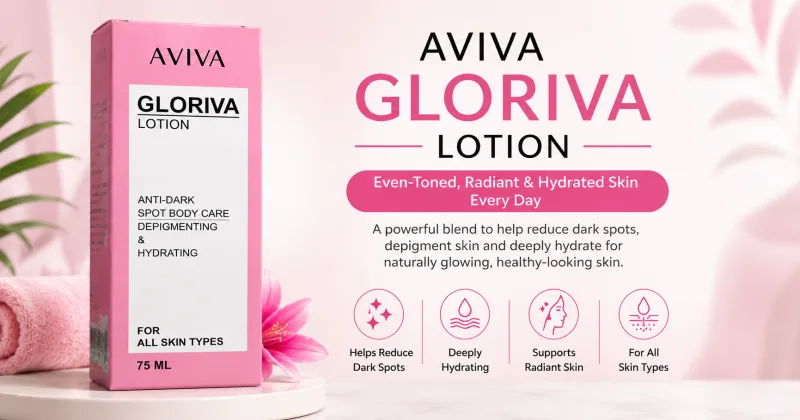
Gloriva Lotion is a skincare lotion formulated to provide hydration while supporting a brighter, smoother, and more even-looking complexion. The product information available for Gloriva Lotion lists ingredients including L-Glutathione, Vitamin C, Kojic Acid, Liquorice Extract, Niacinamide, AHA, BHA, and Glycerine. These ingredients are commonly used in skincare formulations focused on moisturisation, skin texture, and the appearance of uneven skin tone.
Gloriva Lotion is associated with the Aviva Pharma brand and is positioned as part of a skincare routine for concerns such as dull-looking skin, uneven complexion, pigmentation, and rough texture. Individual results can vary depending on skin type, lifestyle, sun exposure, and consistency of use. For general information about taking care of your skin, you can also explore the American Academy of Dermatology skin care basics.
What Is Gloriva Lotion?
Gloriva Lotion is a topical skincare product designed to moisturise the skin while providing ingredients commonly associated with brightening and skin-conditioning routines. Its formulation combines moisturising ingredients with antioxidants and exfoliating components to support the appearance and feel of the skin.
Glycerine is included to help attract and retain moisture, which can help the skin feel softer and more comfortable. Niacinamide is another widely used skincare ingredient that may help support the skin barrier and improve the appearance of uneven skin tone and texture.
The formula also contains ingredients such as Kojic Acid, Liquorice Extract, Vitamin C, and L-Glutathione, which are commonly found in products designed to improve the appearance of dull or uneven-looking skin. The product also includes AHA and BHA, which provide exfoliating properties that may help remove accumulated dead skin cells and improve the appearance of skin texture.
Key Ingredients in Gloriva Lotion
The combination of ingredients in Gloriva Lotion is intended to provide multiple skincare benefits. Understanding the role of individual ingredients can help you better understand how the product may fit into your skincare routine.
L-Glutathione
L-Glutathione is an antioxidant that is naturally present in the body. It is commonly used in cosmetic and skincare formulations because of its antioxidant properties. In topical skincare products, it is often included in formulations designed to support a brighter and more radiant-looking complexion.
Vitamin C
Vitamin C is a popular skincare ingredient known for its antioxidant properties. It is commonly used in skincare routines aimed at improving the appearance of dull skin and supporting a more even-looking complexion. Vitamin C is also associated with collagen production, which plays an important role in maintaining the structure and firmness of the skin.
Kojic Acid
Kojic Acid is frequently used in skincare products designed to address the appearance of dark spots and uneven pigmentation. It works by affecting melanin production in the skin and is commonly found in brightening formulations. Because some people may experience sensitivity when using products containing Kojic Acid, it is important to follow the product directions carefully.
If you are using products containing brightening ingredients, daily sun protection is particularly important. You can learn more about protecting your skin from sun exposure through the American Academy of Dermatology sun protection guide.
Liquorice Extract
Liquorice Extract is used in many cosmetic formulations for its soothing and skin-conditioning properties. It is also commonly included in products designed to improve the appearance of uneven skin tone and pigmentation.
Niacinamide
Niacinamide, also known as Vitamin B3, is a versatile skincare ingredient. It is commonly used to support the skin barrier, improve the appearance of uneven skin tone, and help maintain smoother-looking skin. It may also be useful for people who experience excess oil or visible pores.
AHA and BHA
AHA and BHA are exfoliating ingredients that work in different ways. Alpha Hydroxy Acids, or AHAs, generally work on the skin's surface to help remove dead skin cells and improve the appearance of rough texture. Beta Hydroxy Acids, or BHAs, are oil-soluble and can work within pores to help remove excess oil and impurities.
Because exfoliating ingredients can increase skin sensitivity in some people, it is important to avoid overusing multiple exfoliating products at the same time. If your skin becomes excessively dry, irritated, or uncomfortable, reduce use and consult a dermatologist if symptoms persist.
Glycerine
Glycerine is a well-known humectant used in moisturisers and lotions. It helps attract water to the skin and supports hydration. Regular moisturisation can help the skin feel softer, smoother, and more comfortable, particularly when dryness is caused by environmental factors.
Potential Benefits of Gloriva Lotion
Gloriva Lotion combines moisturising, brightening, antioxidant, and exfoliating ingredients. Depending on individual skin type and regularity of use, the lotion may offer several potential skincare benefits.
- May help improve the appearance of dull-looking skin.
- May support a more even-looking skin tone.
- May help improve the appearance of pigmentation and dark spots.
- May help moisturise dry or dehydrated skin.
- May support smoother-looking skin texture.
- May help remove the appearance of accumulated dead skin cells through exfoliating ingredients.
- May help maintain softer and more supple-looking skin.
- Provides ingredients with antioxidant and skin-conditioning properties.
Results from skincare products are not always immediate and may vary significantly between individuals. Factors such as the severity of pigmentation, skin sensitivity, sun exposure, age, hormonal changes, and other skincare products being used can influence the results.
How to Use Gloriva Lotion
Apply Gloriva Lotion to clean, dry skin according to the directions provided on the product packaging or as advised by your dermatologist or healthcare professional. Use an appropriate amount and spread it gently over the desired area without excessive rubbing.
If you are using the lotion for the first time, consider applying a small amount to a limited area of skin before regular use. This can help you identify whether your skin is sensitive to any of the ingredients.
Because the product contains exfoliating and brightening ingredients, avoid applying it to broken, irritated, or recently damaged skin unless a healthcare professional has advised you to do so.
During the daytime, use a broad-spectrum sunscreen as part of your skincare routine, particularly when using products containing exfoliating or pigmentation-focused ingredients. For additional information about choosing and using sunscreen, visit the FDA information on sunscreen use.
When Should You Use Gloriva Lotion?
The appropriate time to use Gloriva Lotion depends on your skincare routine and the instructions provided with the product. Some people may prefer using skincare lotions during their evening routine, while others may use them during the day as directed.
If you are using other active skincare products, such as retinoids, strong exfoliating acids, or other pigmentation treatments, avoid combining multiple active ingredients without professional guidance. Using too many active products at the same time may increase the risk of dryness, irritation, redness, or sensitivity.
A simple skincare routine that includes gentle cleansing, appropriate moisturisation, and daily sun protection can help support the skin while using targeted skincare products.
Possible Side Effects of Gloriva Lotion
Most topical skincare products are well tolerated when used correctly, but some individuals may experience irritation or sensitivity. Possible reactions may include redness, dryness, itching, burning, stinging, or mild peeling, particularly if the skin is sensitive to exfoliating or brightening ingredients.
If you experience significant irritation after applying Gloriva Lotion, discontinue use and allow your skin to recover. If symptoms continue, become severe, or are accompanied by swelling or other signs of an allergic reaction, seek advice from a qualified healthcare professional.
Do not apply the product to broken skin or areas with active irritation unless specifically advised by a dermatologist. If you have a history of sensitive skin or allergies to cosmetic ingredients, discuss the product with a healthcare professional before regular use.
Precautions While Using Gloriva Lotion
Before incorporating Gloriva Lotion into your skincare routine, check the ingredient list carefully, particularly if you have known allergies or sensitive skin. A patch test may be helpful when introducing a new skincare product.
Since the formulation contains exfoliating ingredients such as AHA and BHA, avoid excessive exfoliation. Do not use multiple strong exfoliating products together unless recommended by a dermatologist.
Sun protection is an important part of any skincare routine focused on pigmentation or uneven skin tone. Regular sun exposure can contribute to the development and persistence of pigmentation, so applying sunscreen and limiting unnecessary sun exposure can support your overall skincare goals.
Who Should Take Extra Care?
People with very sensitive skin, active eczema, severe acne, rosacea, or other ongoing skin conditions should consult a dermatologist before using products containing multiple active ingredients.
If you are pregnant or breastfeeding and are unsure whether a particular skincare ingredient is suitable for you, speak with your healthcare provider before starting a new skincare product.
Children should not use pigmentation-focused or exfoliating skincare products unless specifically recommended by a qualified healthcare professional.
Can Gloriva Lotion Be Used for Pigmentation?
Gloriva Lotion contains ingredients such as Kojic Acid, Liquorice Extract, Vitamin C, Niacinamide, and L-Glutathione that are commonly used in skincare products targeting the appearance of uneven skin tone and pigmentation.
However, pigmentation can have many different causes, including sun exposure, acne marks, hormonal changes, inflammation, and certain medical conditions. The most suitable treatment depends on the underlying cause.
If pigmentation is persistent, rapidly changing, widespread, or not improving with a consistent skincare routine, it is advisable to consult a dermatologist. A professional assessment can help identify the cause and determine whether additional treatment is required.
Gloriva Lotion for Dull and Uneven-Looking Skin
Dull-looking skin can be influenced by dryness, buildup of dead skin cells, environmental exposure, lack of sleep, and other lifestyle factors. A consistent skincare routine can help improve the overall appearance and texture of the skin.
The combination of moisturising and exfoliating ingredients in Gloriva Lotion may help improve the appearance of rough or dull-looking skin over time. However, skincare results vary, and maintaining realistic expectations is important.
Along with topical skincare, adequate hydration, a balanced diet, sufficient sleep, and regular sun protection can all contribute to maintaining healthy-looking skin.
Frequently Asked Questions About Gloriva Lotion
What is Gloriva Lotion used for?
Gloriva Lotion is a skincare product designed to moisturise the skin and support a brighter, smoother, and more even-looking complexion. Its listed ingredients include L-Glutathione, Vitamin C, Kojic Acid, Liquorice Extract, Niacinamide, AHA, BHA, and Glycerine.
Can Gloriva Lotion help with pigmentation?
The product contains ingredients commonly used in skincare formulations targeting uneven skin tone and the appearance of pigmentation. However, results vary between individuals, and persistent pigmentation should be evaluated by a dermatologist.
Can I use Gloriva Lotion every day?
The frequency of use should follow the product instructions or the recommendation of your dermatologist. Since the formulation includes exfoliating ingredients, daily use may not be suitable for everyone, particularly those with sensitive skin.
Should I use sunscreen with Gloriva Lotion?
Yes. Daily sun protection is an important part of a skincare routine, especially when using products containing exfoliating or pigmentation-focused ingredients. Use a suitable broad-spectrum sunscreen during daytime.
Can Gloriva Lotion be used on sensitive skin?
People with sensitive skin should introduce the product cautiously and consider a patch test before regular use. If irritation occurs, discontinue use and consult a dermatologist if symptoms persist.
Can I use Gloriva Lotion with other skincare products?
It may be possible to use Gloriva Lotion with other skincare products, but caution is advised when combining it with strong exfoliating acids, retinoids, or other active ingredients. Using too many active products together may increase skin irritation.
How long does it take to see results?
The time required to notice visible changes can vary depending on the individual's skin condition, the cause of pigmentation or dullness, consistency of use, and sun exposure. Skincare products generally require consistent use, and results may take time.
Disclaimer
This article is intended for general informational and educational purposes only. It does not replace professional dermatological advice, diagnosis, or treatment. Individual skin types and conditions can vary, and the information provided here may not be suitable for everyone. Always check the product packaging for the most current ingredient and usage information. If you have a persistent skin condition, severe irritation, or unexplained pigmentation, consult a qualified dermatologist or healthcare professional. For additional general skin health information, you can visit the American Academy of Dermatology.